
Technical delivery isn't what determines whether a data transformation actually sticks. This post reflects on Analytics8's partnership with Law Society, showing how coaching internal teams, acting as an impartial voice and building genuine excitement at leadership level turned a typical consultancy relationship into one where Analytics8 stopped being treated as a third party altogether. Told through real examples and client quotes, it makes the case that data platforms succeed or fail based on whether the people around them are capable, confident and motivated to own the outcome.
The Quiet Work Nobody Puts in a Case Study
What our partnership with Law Society taught us about the real work of data transformation.
When you walk into an organisation as a third party, you’re often starting at a disadvantage you didn’t create. Others have been there before you. They were focused on delivering a technical solution – and when the work was done, they handed it over the fence to teams that weren’t ready to support it, understand it, or iterate on it.
The result can be an us-and-them dynamic that has nothing to do with you personally – but you feel it. There’s a quiet scepticism around decisions. An unspoken question about whether the direction being recommended is really in their interest, or just in yours. A reluctance to fully commit to your ideas.
We’ve seen this dynamic enough times to know one thing for certain: you don’t overcome these challenges by delivering the perfect technical solution. You overcome it by being a genuinely human partner – one who finds ways to connect with people, empower them, and put them at the centre of decisions about their own data.
Empowering People, Not Replacing Them
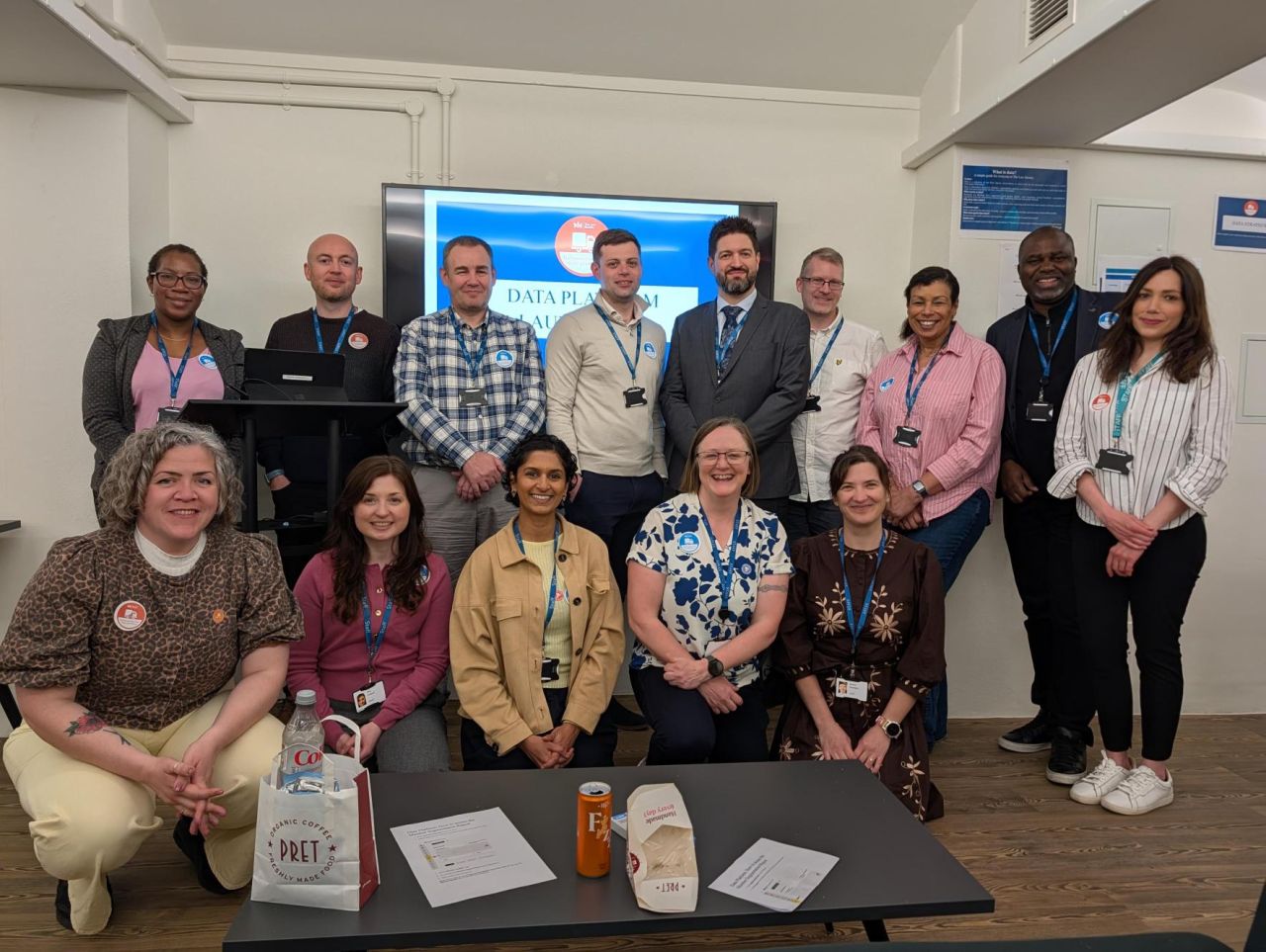
We weren’t brought into Law Society just to augment their internal capability. That might be how some consultancies choose to operate – but it’s never how we think about it. Consulting, in the truest sense, isn’t about arriving with the answers. It’s about taking the time to understand the business, understand the people, and drive change in a way that works for them.
Rather than arriving as the data experts who know best, we worked alongside their existing architects and technical staff – sharing knowledge, explaining decisions, and helping to build the understanding and confidence needed to champion those decisions internally. The goal is to always explain the why, not just the what or how.
This is something we find in almost every engagement: the people who will ultimately determine whether a data platform succeeds aren’t the consultancy who built it. They’re the internal champions – the architects, the product owners, the managers – who understand it well enough to advocate for it, explain it to colleagues, and carry it forward when the consultants have gone. Finding those people and giving them the skills and confidence to play that role, is some of the most important work we do. And it almost never appears in a case study or measures of project success.
The Work That Compounds Quietly
Over the past 12 months, a lot of the most meaningful work happened in ways that don’t show up in a project plan. Here’s some of what that actually looked like.
Growing the people around the platform
Lucy joined the project team as a Product Owner without a deep data platform background. We have consistently championed her development – explaining decisions, involving her in the right conversations, and building her confidence to represent the platform internally.
“The A8 team have really enabled me to grow and develop as a data professional. I have noticed a massive difference in my knowledge and confidence from when I joined the project team to now.” – Lucy Rider, Product Owner, Law Society
On the infrastructure side, we pushed the team to move into Terraform earlier than planned – not because it was the easy path, but because it was the right foundation. That investment paid off. One of the infrastructure engineers went on to become Terraform certified. That’s a capability Law Society now owns permanently.
Being the impartial voice in the room
Data and AI is a noisy market. Vendors promise the world, and it’s easy for internal teams to get pulled toward what sounds exciting rather than what’s right for the business. We acted as an honest, independent voice – helping Law Society cut through the marketing noise and make technology decisions grounded in their actual needs.
When options papers were being written, we were the ones stress-testing assumptions, debating openly, and making sure decisions would serve their current and future requirements.
Connecting people and surfacing what was hidden
Some of the most valuable work we did wasn’t technical at all. By sitting across functions and building relationships between teams that hadn’t previously worked closely together, we started surfacing issues that had been quietly causing problems for years.
Terminology inconsistencies. Conflicting segmentation definitions across departments. Architectural pain points rooted in underlying system issues that no single team had full visibility of. These weren’t problems that had been ignored – they simply hadn’t had a connective thread to join them up. We provided the thread and helped teams feed pain points up to the right people.
Building excitement, not just capability
Capability without enthusiasm doesn’t go far. So, alongside the engineering and governance work, we made a point of bringing people along on the journey – demoing innovative ideas at exec level, including Genie and ML workloads on Databricks, to show what is possible and build genuine excitement about where data could take the organisation.
The result was a leadership team that weren’t just vaguely aware of the data teams work – they were excited by it and continue to actively engage with us.
None of this is dramatic. There’s no single moment where everything changed. It’s the accumulation of small, consistent choices – to explain rather than just decide, to coach rather than just deliver, to invest in people rather than just the platform.
When The Dynamic Shifts
We live this philosophy in all our engagements and consistently turn scepticism into valued partnerships. We stop being managed as a third party and start being treated as a member of the team. Decisions get made collaboratively rather than cautiously. People stop wondering whether your recommendations are in their interest – they already know the answer.
Martina, Infrastructure Manager at Law Society, summed up where things had got to:
“Quite often we forget you are a third party working with us, I just think of you as a member of the T&C team.” – Martina, Infrastructure Manager, Law Society
That’s not something you can engineer or put in a proposal. It’s something you earn, slowly, by showing up the same way every time.
“You are not like some consultancies…you always do the right thing rather than things that would make us feel forced to keep you around.” – Stephen Beales, Information Manager, Law Society
The Bottom Line
Data transformations succeed or fail on whether the people inside the organisation are capable, confident and motivated to own the outcome. The technical platform is the foundation – but it’s the human work that determines whether it ever gets used.
Kate Evans, Executive Director – Technology & Change at Law Society, captured the full arc of the partnership:
“We chose Analytics8 for their expertise in data strategy and they stayed for the execution. They’ve integrated into our leadership team to guide a multi-year strategy that evolves our Azure Databricks foundation while maturing our internal talent to own the future of our data and artificial intelligence.”
That’s what we’re aiming for on every engagement. Not just to deliver – but to leave the organisation more capable than we found it.